Never a Frown, With Golden Brown: The Medieval Revival of TikTok
By Natalie Hopwood
In December 2024, TikTok user @snapdrag.n uploaded a twenty-second video with the caption ‘reject minimalism, medieval revival 2025.’ The video has images of fair maidens, gallant knights, castles, and medieval-inspired fashion all set to the song ‘Golden Brown’ by the Stranglers. The video calls for a rejection of minimalism, itself a trend linked to the rising political conservatism and regression of the 2020s, and an embrace of the aesthetically colourful, gaudy, and fantastical medieval.
Sofiia Znakharenko writes in her opinion piece, ‘The Modern Medieval: Fantastical Fashion and Cultural Immortality’ that American popular culture is going through a medieval revival.[1] A medieval revival, by its very nature, is a return to the imagery and iconography of the European Middle Ages (c. 500-1500 CE). Many modern uses of the medieval seek to portray the Middle Ages as something dark and gritty, or harken to the conservative nature of the past, but the medieval revival adopts an aesthetic that is both bright and vibrant, whose arrival is motivated by a discontent and dissatisfaction with the stresses of modern political troubles. Racha Kirakosian explains that ‘conceptions of the Middle Ages are the product of countless overlaps between imaginary projections, often influenced by political and economic interests.’[2] In other words, the medieval revival focuses on the interests of a contemporary audience rather than a faithful reconstruction of the past. Its imagery evokes the medieval period through a modern lens, and is a sign that people are yearning for fanciful escape from times of turmoil and upheaval.
The first major revival came in the Romantic period (c.1800-1850) as a response to the environmental damages and aesthetic changes caused by the Industrial Revolution and therefore was a longing to return to an arboreal, pre-industrial age. The second revival came in the 1960s-70s from counterculture, folk music, and an interest in J.R.R. Tolkien’s The Lord of the Rings among co-eds at US universities – each rejecting the status quo due to concerns about capitalism, civil rights, and the Vietnam War. Controversial politics, environmental concerns, and economic hardships are the bedrock to the cultural return to a romanticised, unburdened Middle Ages. With these as criteria for a longing for the past, then it is fair to ask why are we reviving the medieval now?
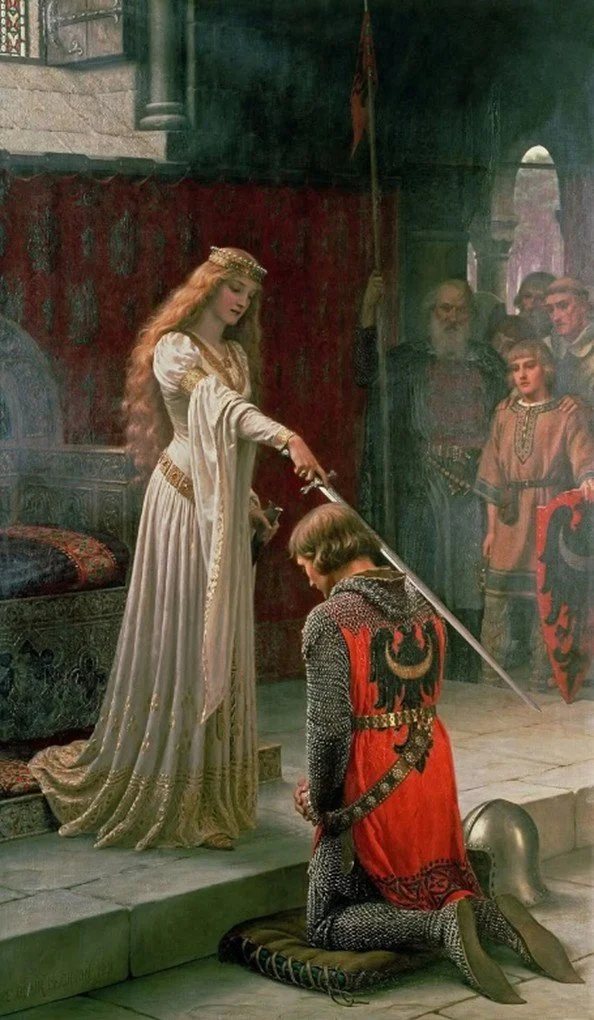
The Accolade, Edmund Leighton (1901)
Zoe Kendall suggests in her article ‘Fashion's Going Medieval’ that the rise of the medieval aesthetic as a trend on social media can be traced to the COVID-19 pandemic and the need for a digital escape during lockdown, ‘exacerbated by the increasingly isolating nature of algorithm-driven online spaces.’[3] When a plague forced us onto social media for socialisation, people were drawn to a time of the Black Death and similar fears of isolation and disease. While the COVID-19 pandemic may have started the reliance on nostalgic comfort and impersonal socialisation via social media, by 2026 the need has only become more prominent. The lockdown is now over half a decade in the past, but the United States suffers from a cost-of-living crisis, inaccessible healthcare and welfare, and continued fears over the rise of fascism and outbreaks of war after the results of the 2024 US Presidential Election. During the 2024 election cycle, TikTok became a hotbed for political material from both left- and right-leaning spaces and, within those same spaces, the medieval revival.[4] This social media medieval revival gained popularity around the same time on the platform as a reaction against the rise of the alt-right and its harmful uses of the medieval by cultivating a vision of the Middle Ages that brings comfort and assuages stress in the unprecedented times of modern-day America.
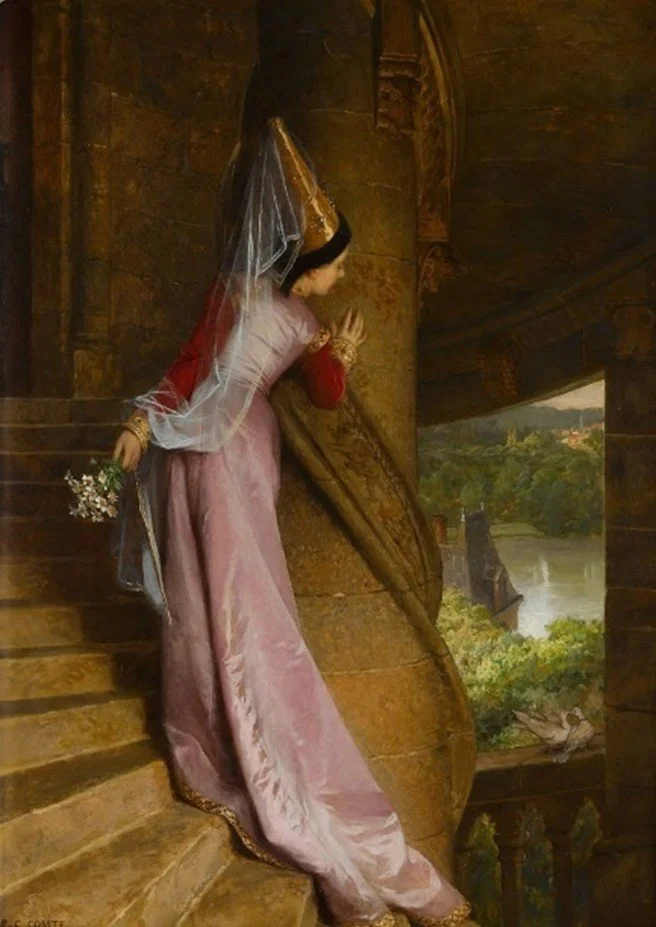
The Secret Rendezvous, Pierre-Charles Comte (1823-1895)
TikTok is a social media platform that relies on short-form videos (typically less than a minute in length), an endless scroll feature on its For You Page, and reusable, catchy sound clips to continuously create new content and cultivate new trends to catch the interest of the masses. The medieval revival, for the purposes of this discussion, is the name of a TikTok trend, wherein people will reuse the same imagery and sound clips to generate a shared aesthetic to enjoy. There are countless videos of people dressing up in medieval fashion or producing other medieval-themed videos to songs like Kate Bush’s ‘Army Dreamers’ or Enya’s ‘Orinico Flow.’ For the purposes of this analysis, I sampled over 100 edited collage videos with a hashtag relating to the medieval and using the most popular song of the trend, The Stranglers’ ‘Golden Brown.’[5] As of April 2026, there were 313.1K videos under the sound for ‘Golden Brown,’ 712.2K under #medieval, and 672K under #medievaltiktok. The images used in these videos tend to be from prior revivals and popular culture, like films and television. Pre-Raphaelite paintings such as The Accolade andThe Secret Rendezvous are often one of the first images displayed. The videos are then interspersed with stills from fantasy films such as Peau d’âne (1970), Excalibur (1981), Legend (1985), and Maleficent (2014), as well as modern photoshoots by photographers such as Elizabeth Elder. On occasion, as seen in the @snapdrag.n video, there are images from the 1960s medieval revival, including Karl Ferris’s fashion shoots for Honey with Pattie and Jenny Boyd or his collaborations with The Fool design collective.
Each sampled video follows the same basic formula and uses similar images to evoke a sense of medievalnostalgia from the watcher. In her article ‘Medievalism and its discontents,’ Renee R. Trilling defines nostalgia as ‘a way of having one’s cake and eating it, too.’[6] Along these same lines, medieval nostalgia is a wilful ignorance of the reality of the Middle Ages and an avoidance of the grim reality of what lies outside the safety, comfort and beauty of the screen. The desire for the medieval is not for the lived-experience of those in Europe c.500-1500 CE, but for what society and popular culture deems to be medieval,[7] something more wonderful, more whimsical, and utterly fantastical. It suggests that when faced with the harsh reality of the present, people are finding comfort in a romanticised version of the past. The TikTok trend focuses on a fantasy aesthetic, as none of the imagery within these videos present a realistic portrayal of the Middle Ages, if such a thing exists. As Paul B. Sturtevant writes, this romantic reimagining of the past presents ‘the Middle Ages not as they were, but as they should have been.’[8] The nostalgia is for a past that has never existed that people long for anyway.
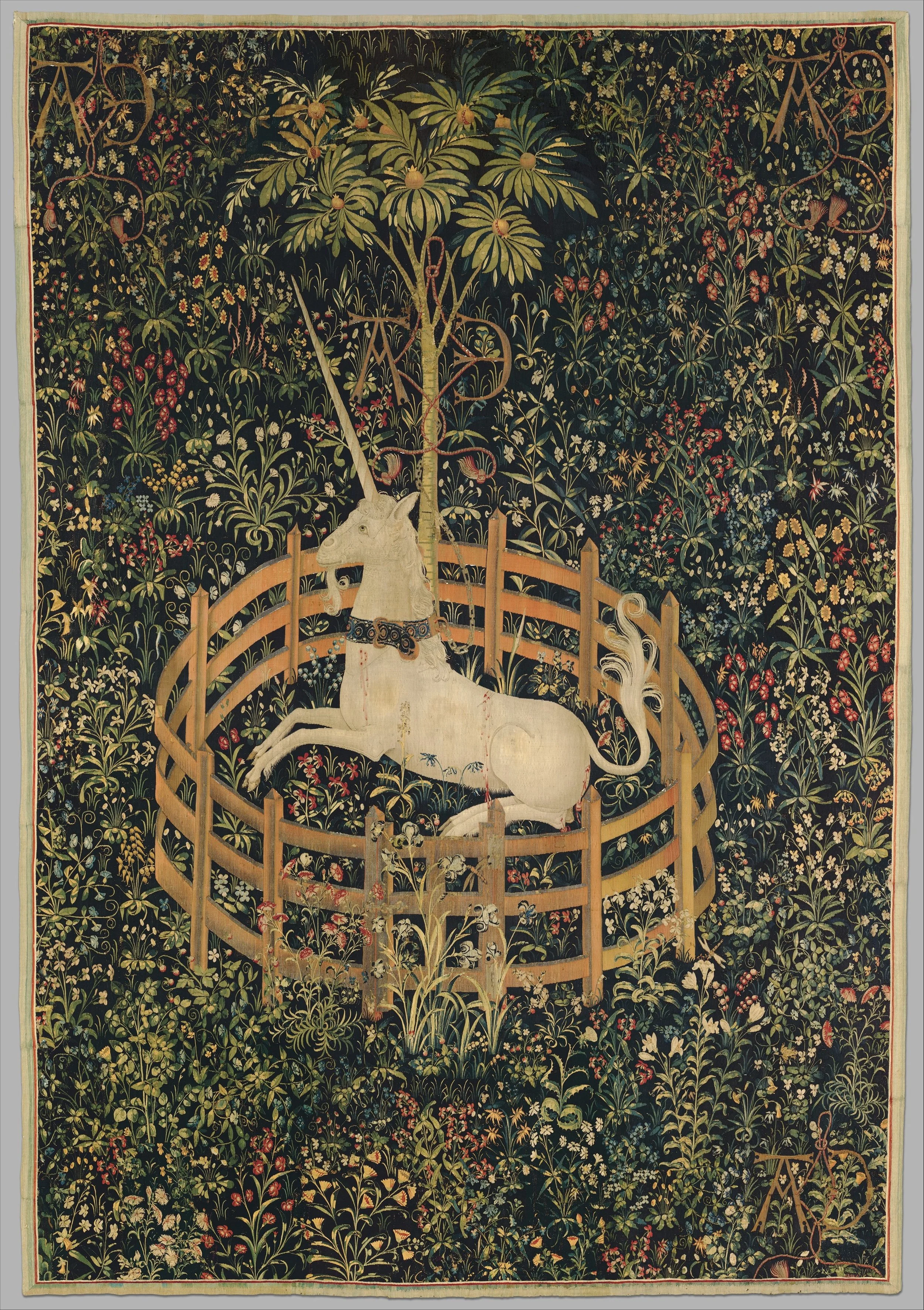
The Unicorn Rests in the Garden (1495-1505)
This newest revival focuses on the aesthetics of the medieval as a comfort against right-wing, conservative politics, but it is impossible to only use the aesthetics without meaning. A medieval revival is, by its very nature, political. It is a progressive movement that reflects on and reacts to the problems of the society that creates it, either as active commentary or passive escapism. As an aesthetics-based trend, the TikTok medieval revival is a prime example of Andrew B.R. Elliot’s concept of banal medievalism. Elliot argues that something as little as a meme of a medieval cat or a text post joking about ‘ye olde English’ can be the most pervasive form of medievalism to general audiences as it informs indirectly and can be laced with hidden meanings or, when used negatively, dog-whistles.[9] Banal medievalism is present on both sides of the political spectrum, either used to push harmful alt-right ideology in a non-threatening package or to act as progressive escape from current fears and anxieties. On social media, these banal uses of the medieval always run the risk of being misinterpreted by their viewers or, more often, being enjoyed only at face value rather than through the lens of the cultural and political upheavals which surround it.
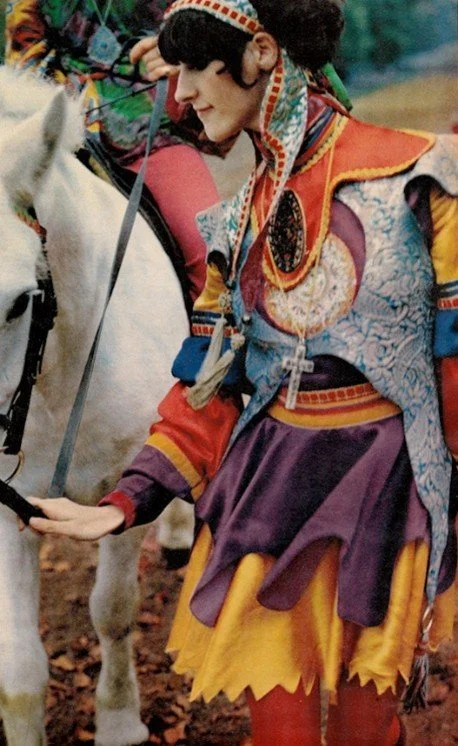
The Fool Design Collective (1968)
The use of ‘Golden Brown’ as the sound clip in this trend highlights the concerns around face-value interpretations of the medieval on social media. The song is explicitly about drug use, with the chorus line ‘never a frown, with golden brown’ being a reference to heroin. However, the song was likely chosen simply because it sounds medieval, with a steady, waltzing beat, harpsichord sounds, and a choir-like harmony. It articulates a medieval feeling more than a specific intent by the songwriters. Helen Dell’s work on medieval music compares the medieval sound of these types of songs to a ‘nostalgic desire,’ wherein reality is superseded by aesthetic and romanticisation.[10] This sound, and by extension this use of ‘Golden Brown,’ returns both to Trilling’s conception of medieval nostalgia and Elliot’s banal medievalism. At first glance, it would be reasonable to view this trend as one that solely focuses on the aesthetic without a consideration for long, complex history of the medieval in popular imagination, as well as a refusal to acknowledge the political struggles of the present for a preference to imagine a soft and demure fantasy of the past. Yet, TikTok as a platform, even when engaging in seemingly shallow trends, has proven to be a hotbed for strong political stances and political echo-chambers. Even the simplest imagery and the blandest of song choice can be employed to push deeper ideology to the intended audience.
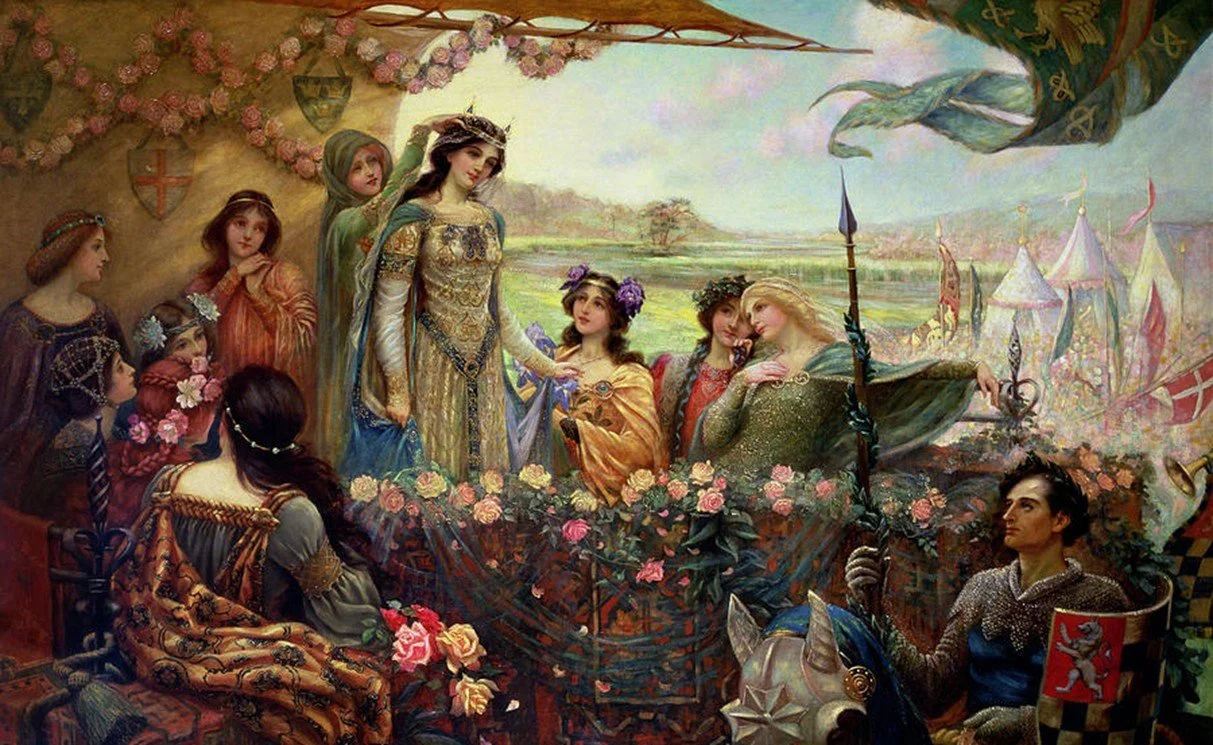
Lancelot and Guinevere by Herbert James Draper (c. 1890)
Thus, the nostalgic escapism of the medieval revival on TikTok, though seemingly banal and aesthetically driven, cannot be merely a neutral, apolitical digestion of the past. In reality, this use of the medieval fights against the conservative desire to appropriate medieval imagery for division-ist politics. Alt-right groups have always employed medieval imagery, such as the cross of the Knights Templar and Norse runes, as a way to provide evidence to outdated and inaccurate ideas of medieval Europe as a fully white, fully Christian world.[11] From George W. Bush’s use of the term crusade to justify his war in the Middle East to a post-9/11 America, to the so-called ‘Norse pagans’ leading the January 6th insurrection at the Capitol Building in 2021, the medieval can just as easily be used to laud the dangerous and extremist views that the medieval revival is attempting to escape from. This newest medieval revival rejects the racialized and patriarchal medievalisms that appeal to the alt-right by seemingly rejecting politics altogether. Those who engage with the medieval revival are those who are ostracized by conservative and alt-right ideology: women, people of color, and members of the LBGTQIA+ community. They use the Middle Ages as a fantasy space, one which is open and welcoming to all who wish to participate, and which has no racism, sexism, capitalism, or environmental hardships. It is a perfect bubble to hide in and a perfect veneer to lay over real concerns about the state of the world.
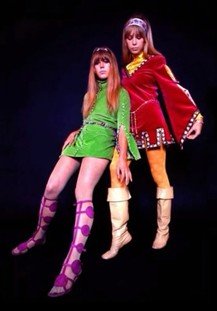
Pattie and Jenny Boyd, modelling “Camelot” tunics, designed and photographed by Karl Ferris (1967 Honey magazine)
David Matthews writes in his chapter ‘Middle’ in Medievalism: Key Critical Terms that ‘living as we do in what we are constantly assured are the end times, those middling days now seem like a good thing to take into the future.’[12] In other words, the middle is where it is safest. When the world feels like it is at its worst, when there are crises and wars and death every day on every news channel, people turn towards an era of the past that, by its very name, is neither a beginning nor an end. Though a false image of the past, these Middle Ages remain a bright light that goes beyond the limited run of TikTok trends to a signal that political discontent is rampant and the desire for somewhere free, fantastical, and welcoming is returning.
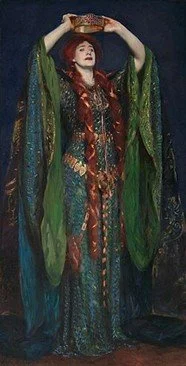
Ellen Terry as Lady Macbeth by John Singer Sargent (1889)
The TikTok medieval revival is not a step into the alt-right pipeline nor a dog-whistle for secret fascist ideology. It provides escapism from these dangerous misuses of the medieval and turns the Middle Ages into an easily digestible, nostalgic fantasy of romance and magic. Through short-form videos and aesthetic collages, TikTok users are ushered into a medieval world that is beautiful, safe, and seemingly harmless. Yet, the medieval revival is never just an aesthetic trend. The use of the medieval has always been connected to the political upheavals and concerns of the time it is revived. The medieval being used to push strong political ideologies, as this trend allows an escape to resist the rise of alt-right and ultra-conservative stances on both social media and beyond. How this medieval zeitgeist will develop remains to be seen, but it shows that social media is a valuable and necessary tool for understanding how people see and react to the Middle Ages in the twenty-first century.
Author Bio:
Natalie Hopwood (she/her) is a PhD candidate at the University of Leeds. Her doctoral research focuses on monster encounters as points of intertextuality in Old Norse fornaldarsögur and riddarasögur. She also works on the reception of Old Norse mythology, and other medieval literature, in modern media, particularly American comic books such as The Mighty Thor, The Demon, and The Sandman. She has appeared on the Romancing the Gothic webinar series and the American Medieval podcast series.
Bluesky: @nrhopwood.bsky.social
Substack: https://nataliehopwood.substack.com/
NOTES:
[1] Sofiia Znakharenko, ‘The Modern Medieval: Fantastical Fashion and Cultural Immortality,’ SmokyNow, May 7, 2023, https://smokynow.com/the-modern-medieval-fantastical-fashion-and-cultural-immortality/ (accessed May 30, 2025).
[2] Racha Kirakosian, ‘Fantasy Medievalism: On the Aesthetic of the Mythical,’ in Fantasy Aesthetics: Visualizing Myth and Middle Ages, 1880-2020, eds. Hans Rudolf Velten and Joseph Imorde (Bielefeld: transcript Verlag, 2024), p. 218, https://www.transcript-publishing.com/978-3-8376-7058-5/fantasy-aesthetics/?number=978-3-8394-7058-9&c=413000117.
[3] Zoë Kendall, ‘Fashion’s Going Medieval,’ i-D, March 14, 2023, https://i-d.co/article/bardcore-medieval-fashion-trend/ (accessed May 29, 2025).
[4] ‘TikTok, politics and power: Implications for democracy,’ Westminster Foundation for Democracy, February 2025, https://www.wfd.org/tiktok-politics-and-power-implications-democracy (accessed February 2nd, 2026).
[5] For examples of this trend, see videos created by: @snapdrag.n, @weirdoldtown, @whitemothics, @kyanessio, and @etherealmaiden_.
[6] Renée R. Trilling, ‘Medievalism and its discontents,’ Postmedieval: A Journal of Medieval Cultural Studies 2.2 (2011): 221 [216-224].
[7] Richard Utz, ‘Medieval: The Movie, The Brand,’ Medievalist.net, September 2022, https://www.medievalists.net/2022/09/medieval-movie-brand/ (accessed May 7, 2026).
[8] Paul B. Sturtevant, The Middle Ages in Popular Imagination: Memory, Film and Medievalism (London: I.B. Tauris, 2017). For a summary of Sturtevant’s work, read Paul B. Sturtevant, ‘The Middle Ages in Popular Imagination,’ Public Medievalist, May 22, 2018, https://publicmedievalist.com/ma-popular-imagination/.
[9] Andrew B.R. Elliot, ‘A Vile Love Affair: Right Wing Nationalism and the Middle Ages,’ Public Medievalist, February 14, 2017, https://publicmedievalist.com/vile-love-affair/ (accessed February 2, 2026).
[10] Helen Dell, Fantasies of Music in Nostalgic Medievalism (Manchester: Manchester University Press, 2024), p. 114.
[11] David Matthews, ‘Middle,’ in Medievalism: Key Critical Terms, eds. Elizabeth Emery and Richard J. Utz (Cambridge: D.S. Brewer, 2014),p. 147.
[12] Helen Young, ‘Why the far-right and white supremacists have embraced the Middle Ages and their symbols,’ The Conversation, January 13, 2021,https://theconversation.com/why-the-far-right-and-white-supremacists-have-embraced-the-middle-ages-and-their-symbols-152968 (accessed May 29, 2025).