Good for What Eels Ya: Eels, History, and Social Media
By John Wyatt Greenlee (aka. The Surprised Eel Historian)
Like most people, I never meant to be an eel historian. In fact, until about halfway through my graduate work, I didn’t know anything about eels at all. I intended to write my doctoral dissertation on medieval maps and early modern spatial stories. But somewhere along the way I got distracted by eels on maps, and before I knew it, I was trying to piece together the long and complicated history of eels in pre-modern England. As I researched and wrote, and then began to share my work on social media, eels and eel history began to form a part of my identity in ways I never would have imagined.
A fascinating fish with a complicated life cycle, freshwater eels are catadromous, meaning they are born at sea but live most of their lives in lakes and streams. All the eels in Europe and North America are likely born in the Sargasso Sea. They migrate to land over the course of several years, whereupon they transition to swim in freshwater. They head upstream, find a place to call home, and stay there for between ten and fifteen years. If they live long enough, nature eventually calls them back to the Sargasso to mate and die. Then the process begins anew.
Eels are now critically endangered, with their numbers having collapsed in the last forty years. But historically, eels have been incredibly numerous. As recently as the middle of the twentieth century, eels made up as much as fifty percent of the fish biomass in the downstream sections of rivers in Europe and North America that feed into the Atlantic Ocean. This meant that eels have long been a key component of stream ecologies. It has also meant that they have been an important part of human cultural ecologies. And, in Europe, this was nowhere more true than in England.
Eels were everywhere in pre-modern England. Archeological evidence from the seventh century shows that the South Saxons were eating more eels than all other freshwater fish combined, and more than all marine fish combined.[1] Remains from dig sites throughout the country tell us that eels were a ubiquitous part of the English diet throughout the medieval period. They were a food that cut across class and social lines. Everybody ate, and apparently enjoyed, eels. Poor people consumed them on the regular, and kings like Henry III ordered eels by the tens of thousands for their feasts.
The dinner plate was not the only place where we find eels in the historical record. From at least the tenth century onward, people used eels to pay their rents. The 1086 Domesday book recorded more eel-rents than rents for grain; in 1100 there were at least 540,000 eels owed in rent across England each year. And those were just the eels off the top; many of these were rents that fishermen paid for the rights to catch more eels for personal consumption and for sale. The fish were sold throughout the countryside, often packed in barrels between layers of wet hay or moss and transported alive to market. In addition to being a cheap source of protein, eels provided leather for lacing and fat for medicinal use. Eel fat was believed to be a sovereign cure for hearing loss.
The pre-modern English incorporated eels into their culture, and the fish made up an important part of their identity. The English spoke of themselves as an eel-eating people. They put eels and eel traps on their personal coats of arms, and they included eels in other types of visual artwork to make it distinctively theirs. There are eels in the Bayeux Tapestry, and the fish were a common feature in parish church murals of St. Christopher, where the saint is sometimes shown leaning on an eel spear rather than his traditional staff.
It isn’t only visual culture where we find eels. They show up frequently in literature, and pre-modern English was a language alive with eel metaphors. Shakespeare loved a good eel metaphor, and his plays mention eels more than any other fish. The Bard was not alone in this; eels were common coin as figurative language well into the eighteenth century. Beyond the playhouse, eels show up in historical toponyms, and some of the earliest English laws having to do with conservation focus on protecting eels during their upstream migration.[2] As much as eels swam through the rivers of England, so too did they swim through its culture.
I didn’t know any of this when, looking for a topic for a grad school seminar paper, I noticed several ‘Eel Ships’ on seventeenth century maps of the London. This caught my eye – in part because eels felt so foreign to me – and I wondered how these ships had come to be a civic landmark. I set out to learn about eels in England, and the more I learned, the more questions I had. Nobody had ever bothered to compile all the different ways that eels appear in the historical record, or to ask what stories emerge when you do so. These questions formed the heart of my doctoral dissertation, and have been the focus of my scholarship since.
In many ways, mine was a typical academic story. The best projects are those where you pick up a thread and follow it into the maze, and this is the path I followed. What seemed at first to be an easy question to answer — ‘why are there eels ships on these maps?’ — wound up having deep and complicated answers that took me years to work out. That is standard fare for a history dissertation.
What has been atypical, though, is the social media journey my dissertation topic has taken. In 2018 and 2019, as I worked on the project, I started tweeting out random and ridiculous eel history facts as I found them in the archive. As these tweets gained in popularity, I began adding memes and funny alt-text. This broadened their appeal and helped them to reach a wider audience. Then, in the winter of 2019-2020, several large podcasts mentioned my eel history tweets, and the account’s popularity exploded. The posts that really sparked people’s interests were the ones having to do with eel-rents; there’s something about the idea of paying your mortgage in fish that tickles people’s fancy. That spring, a staff writer for TIME interviewed me for a profile piece, and the exposure helped my account to continue growing. Eventually, my Twitter follower count numbered more than 35,000. While this is not an impressive number by some metrics, it is an unusually large audience for an account based on a very niche academic topic.
Since 2020, I have continued to write one historical eel post every weekday (now on Bluesky as well as Twitter), and they remain popular. I have by now tweeted out the entirety of my doctoral dissertation, and then some. My accounts’ popularity has opened doors for me: I have been an invited guest on numerous podcasts, and I have given interviews to newspapers and magazines. I have even acted as a historical consultant for a Swedish government working group focused on eel conservation. Far more people know me by my social media handle — The Surprised Eel Historian — than know me by my real name.
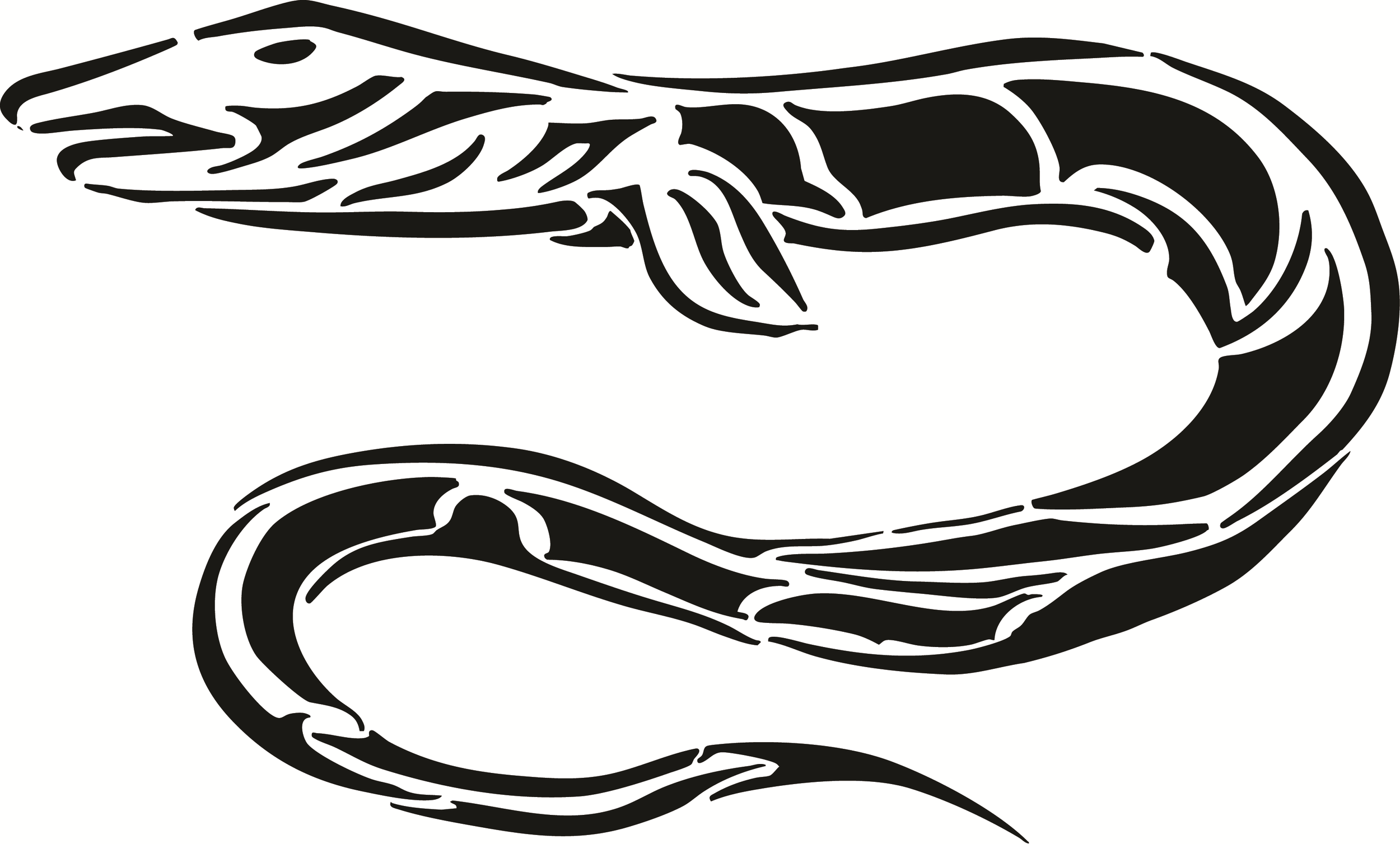
John Wyatt Greenlee, “Surprised Eel”
This unexpected popularity has forced me to think about how and why I continue to share posts about eel history. I started down this road without any intentionality, and with no purpose beyond tweeting pieces of historical trivia that made me laugh. But as my audience grew, so too did my sense of responsibility, and over the last five years I have developed a rationale that drives my social media work. I am an educator at heart, and having an audience of more than thirty thousand readers has given me several unusual opportunities for teaching.
The first is as a history educator. It turns out that telling fish stories can be a useful way of introducing people to a more serious study of the past. In posting about eels’ role in pre-modern England, I am also teaching about art, literature, politics, and trade. To be sure, I am only offering little pieces of history on any given day. But these small bites of the past add up, and people who follow me for any length of time find themselves exposed to a broad swath of pre-modern English cultural history. My approach to talking about eels helps make the past relatable and interesting, and it encourages my readers to learn more.
The second teaching opportunity has to do with the eels themselves. Modern Americans and Europeans do not generally have much exposure to eels. We seldom encounter them or think about them, and when we do it is usually in negative terms. Our cultural references for eels are largely pejorative and wrong: we might recall Flotsam and Jetsam from The Little Mermaid (moray eels, rather than freshwater eels), or we might think of electric eels (which are not actually eels at all!). But presenting freshwater eels in a humorous way, within their historical context, gives my readers a new set of touchstones, and helps them to appreciate the fish.
This change in attitude matters because, as I wrote above, eels are critically endangered. They face serious obstacles from habitat loss, climate change, and overfishing. But scientists have had a difficult time getting the public interested in saving eels. The fish are not charismatic megafauna; they seem weird and slimy, and they can remind us of snakes. This perception poses a serious challenge for conservation efforts, and it is one that I can address through my social media posts. Numbers do not make converts of people, but stories do. By making eels funny, and by making people care for eels in our historical past, I have found that I can move my readers to care about saving eels in the modern world as well.
I did not intend to become an eel historian. And I certainly did not intend for my scholarship to become my public identity. But the pathway that brought me here has been a process of finding ways to answer the age-old academic question of ‘So what?’ with regard to my work. By blending humor with scholarship, I have been able to connect people to the past one post at a time, using social media as an invaluable tool to make my research matter in the world.
Author Bio:
John Wyatt Greenlee is a medievalist and a cartographic historian, and a professional freelance map maker. He is best known, however, for his public-facing work on eels in pre-modern English history. He is “The Surprised Eel Historian” on social media, where he works to raise awareness of the role of eels as an endangered species. His work on eels and eel history has been profiled in TIME, The Guardian, Atlas Obscura, Hakai Magazine, and The New Yorker.
John Wyatt holds a MPA in Nonprofit Management from Park University, an MA in History from East Tennessee State University, and a PhD in Medieval Studies from Cornell University. When not posting about eels, he draws custom maps and artwork on commission.
Further Reading:
Tom Fort, The Book of Eels: Fish, Man, and His Relationship to Nature (New York: HarperCollins, 2002).
Christopher Moriarty, Eels: A Natural and Unnatural History (Newton: David & Charles, 1978).
Charles Rangeley-Wilson, Silver Shoals: Five Fish that Made Britain (London: Chatto & Windus, 2018).
NOTES
[1] Alex Bayliss, John Hines, Karen Høilund Nielsen, Gerry McCormac, and Christopher Scull, Anglo-Saxon Graves and Grave Goods of the 6th and 7th Centuries AD: A Chronological Framework, ed. John Hines and Alex Bayliss, vol. 33, The Society for Medieval Archeology (Abingdon: Routledge, 2017) pp. 118–30.
[2] H.E. Hallam, “The Fens Bylaws of Spalding and Pinchbeck,” Lincolnshire Architectural and Archaeological Society Reports and Papers NS 10, no. 1 (1963): pp. 40–56