Perception is a Spike Turned Inward: Reflecting on Contemporary Events through Sir Gawain and the Green Knight
By Dr. Michael Eden
This article is based on the opening statement from the presentation ‘Failed Seriousness and a Subject Worth Fighting For: Representing Sir Gawain’ at The Interdisciplinary Seminar on Medievalism in Bloomsbury
The poem Sir Gawain and the Green Knight has increasingly become an obsession of my art practice and academic research, its imagery and themes providing inspiration and posing difficult questions. This interest prompted one friend and mentor, upon seeing a painting of mine that depicted Gawain, to comment, ‘careful, you look like a medievalist there’ as if to be that would represent a retreat into a world of romance and nostalgia, away from the contemporary realities that should concern a credible artist (see fig.1). I took no offence at this concern, but I hope to demonstrate here that the exact opposite is true, that while the poem is decorative and beautifully written, we can, as medieval scholar Justine Breton has suggested ‘puncture the fantasy,’[1] drawing out the transformative horror at the poem’s core and consider the challenges offered by the late medieval poem to our own moment (see fig. 2).
At the outset of the poem’s narrative, the Arthurian court is disrupted by the arrival of the towering, otherworldly Green Knight, ‘Þer hales in at þe halle dor an aghlich mayster.’ [There came in at the hall door a fearsome lord][2] The ‘oueral enker grene’ [entirely bright green][3] lord issues a strange challenge: ‘Þat dar stifly strike a strok for an anoþer’ [Who dares to strike a blow and take another in return][4] any knight may strike him with his axe but must receive an equal blow in return, a year and day later.
Gawain, embodying chivalric honor, and youthful naivety, accepts and beheads the Green Knight—only for the creature to calmly retrieve his severed head,
Þe fayre hede fro þe halce hit to þe erþe,
Þat fele hit foyned wyth her fete, þer hit forth roled;
Þe blod brayd fro þe body, þat blykked on þe grene;
& naþel hit watz not abated þe bold monn a whyle,
Bot styþly he start forth vpon styf schonkes,
& runyschly he raȝt out, þer as renkkez stoden,
Lagt to his lufly hed, & lyft hit vp sone.[5][The handsome head tumbles onto the earth
and the king’s men kick it as it clatters past.
Blood gutters brightly against his green gown,
yet the man doesn’t shudder or stagger or sink
but trudges towards them on those tree-trunk legs
and rummages around, reaches at their feet
and cops hold of his head and hoists it high.][6]
Pressing open the eyes of the severed head, the Green Knight speaks and Gawain is reminded of his oath, before the strange figure then departs. This eerie episode immediately destabilizes the court’s rational, ordered world, introducing a figure who defies conventional reality. The Green Knight, whether a pagan force, a divine agent, or an embodiment of nature’s inescapable cycles, represents a test beyond brute strength—one that will force Gawain to confront the limits of his own perception, morality, and human frailty.
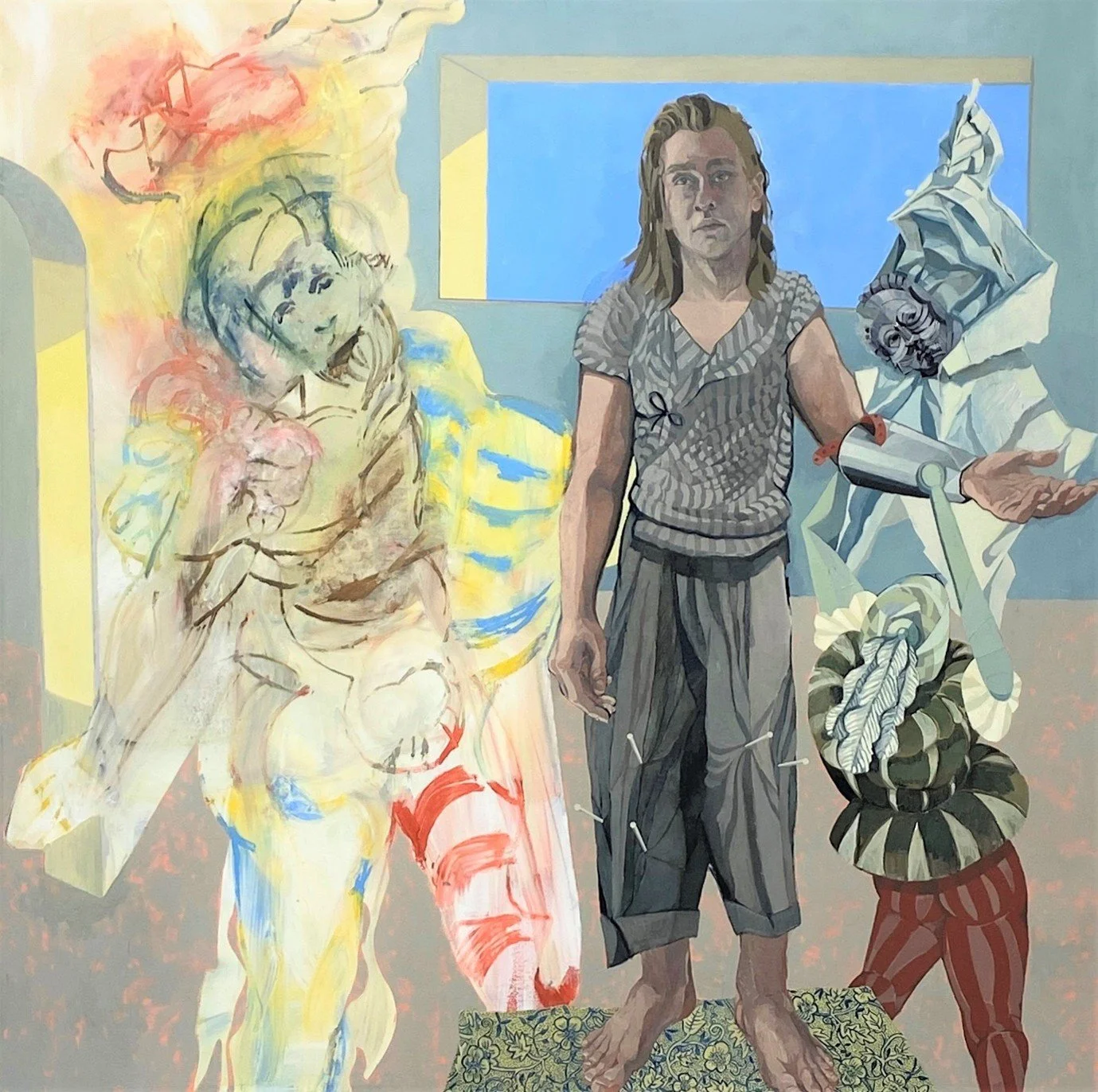
Figure 1: Attendants dressing and armouring Gawain (2021) by Michael Eden
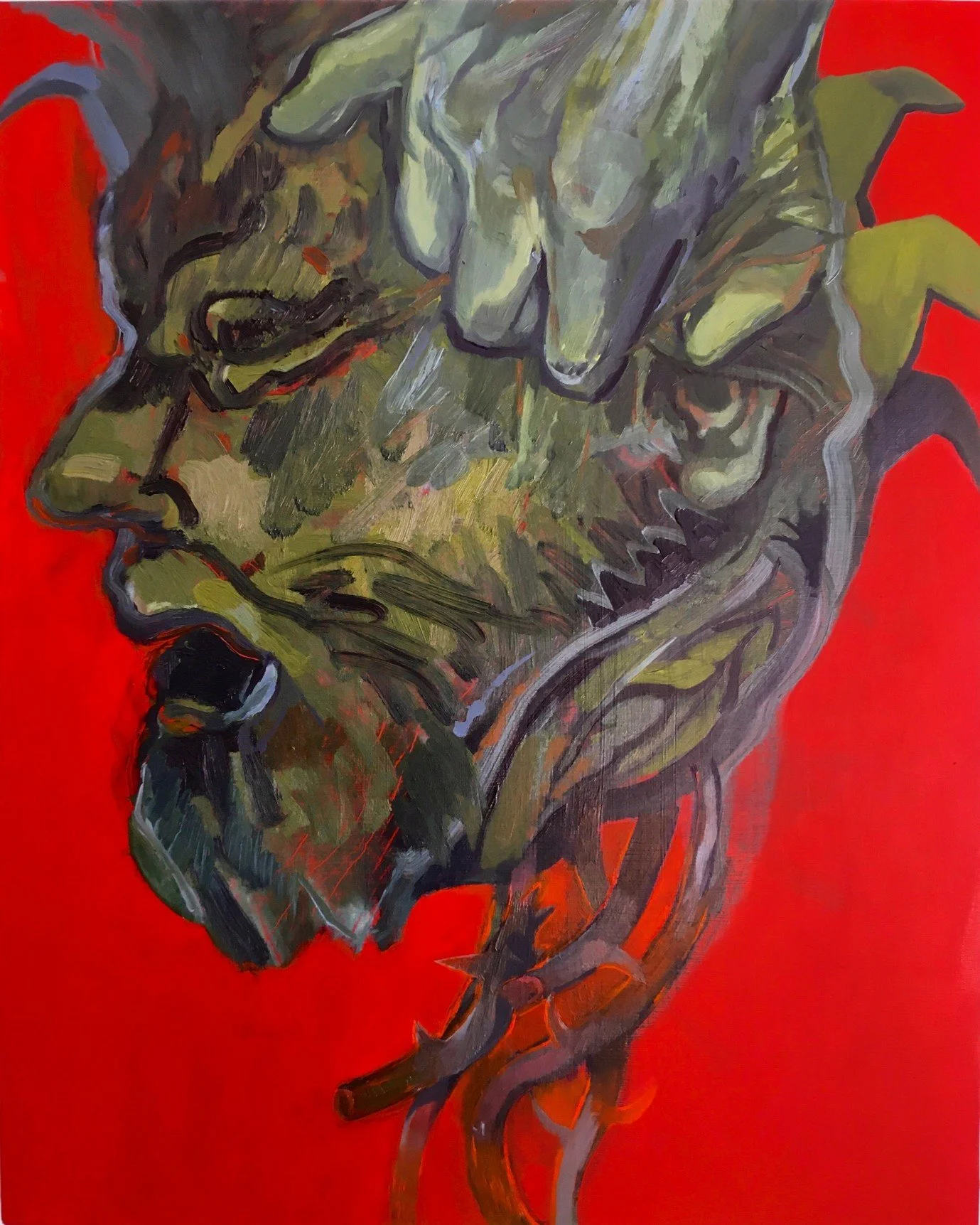
Figure 2: The Green Knight’s Head (point of no return) (2024) by Michael Eden
Symbols, Hypocrites, and Monsters
On the train to the conference Tradition and Innovation in Sir Gawain and the Green Knight (2024), I scrolled through X (formerly Twitter), the recently deregulated social media platform that now force-feeds users an unpredictable and often chaotic mix of information. Three stories appeared in quick succession, seemingly unrelated but bound together by the poem that was on my mind. The links, between the depressing thread of images and ideas that I will describe below, was in part a sense-making projection of mine, bolstered by a great work, but it also speaks to the modern relevance of the medieval poem and the implications the text has for a broader contemporary audience. I suggest the poem might help us to puncture the fantasy of contemporary illusions, to lend Breton’s turn of phrase.[7]
The common thread of the uninvited X stories each exposed the failure of modern figures of authority to reckon with deeper moral and symbolic truths that confronted them. By coincidence, or algorithmic fate, these stories coalesced into a reflection on Sir Gawain and the Green Knight and the monstrous figure at its heart. There is debate in scholarly circles as to the meaning of the ambiguous Green Knight; a monster yes, but one who’s nature is as generous as it is grotesque, and who seems to embody both fears attached to mortality with a kindness of spirit akin to the archetypal guide or teacher. One area of contestation is whether the Green Knight represents Christ himself,[8] intruding into Arthur’s court to test the assembled lords and knights, forcing the question of what the self-regarding knight’s really stand for and if they are worthy individuals, let alone leaders.
If the Green Knight is, in part, a representation of Christ, it is as a disturbing conflation of Christ the Redeemer, the shepherd, and Christ the Destroyer, echoing Michelangelo’s Last Judgment (1536–1541), where sinners recoil in terror at the divine gaze. The potential of the Green Knight to embody this kind of sublime force poses both the idea of that eponymous creature as a stand in for Christ, in the mode of judgement, and, moreover, of Christ appearing as a kind of monstrous other, perceived as such by those whose power he threatens. The force, or the importance of Christ as judge and monster duality does not depend on faith, or even on the existence of Christ in some corporeal sense, it is a matter of how symbols are perceived and weaponized. Rather, I am interested in the reversal at its core: where the central locus of an ideology becomes the ultimate threat to those who depend on that ideology for their power, and it’s that which struck me when encountering the stories on X.
As Slavoj Žižek writes, ‘It is only in this monstrosity of Christ that human freedom is grounded; and, at its most fundamental, it is neither as payment for our sins nor as legalistic ransom, but by enacting this openness that Christ's sacrifice sets us free.’[9] This framing of Christ as a monstrous rupture aligns with the Green Knight’s function as both a judge and a symbol of terrifying grace—an uncanny figure whose power threatens those who most depend on symbolic stability. Instead of a transaction, Žižek sees Christ’s death as an opening—a symbolic act that tears a hole in the system. Through this act, Christ exposes the contingency of the symbolic order (law, institutions, even religion), making room for a new kind of freedom—one not built on guilt or duty, but on radical openness.
The news stories occurred in the order I recount them here, and the severity of the moral erring, and the potential consequences of judgement, coincidentally, increase in severity. They begin with simple, though consequential, closemindedness, move to self-serving corruption, and finally to the blatant disregard of human life, resulting in death tantamount to murder.
Closemindedness as Stability
The first X story involved a video clip of biologist Richard Dawkins. In the video, Dawkins blithely dismisses symbols entirely, exclaiming that he is only interested in reality. Art, metaphor, and fiction are all diminished before Dawkins’ idea of science and the scientist as a supreme arbiter of reality, bringing to mind Alfred North Whitehead’s assertion that ‘hardheaded men want facts not symbols.’[10] For contemporary scholar and Chancellor Professor of Physics Emeritus at William & Mary, Gene Tracy, Dawkins is a ‘reductionist’ to whom Whitehead’s more open approach to reality is a ‘heresy.’ Yet rather than presenting a model of uncompromising realism, Dawkins in the X clip appears—much like in Tracy’s reflection—more like a desperate ego clinging, with his trademark disdain, to a mental plateau. As Tracy puts it, ‘if we’re to make progress in the long run…[we must] avoid getting trapped in zones of comfort.’ Dawkin’s assertion that he is only interested in reality struck me as paradoxical; reality is mediated, necessarily, through symbols—something Dawkins’ rigid materialism appeared blind to. The dragon in question (the symbol/monster of debate in Dawkin’s exchange) was not merely a creature but a signifier, embodying forces beyond human rationalization.
Dawkins’ insistence on a purely empirical approach, and his hierarchical dismissal of those areas of life that do not insist on empiricism, renders him incapable of understanding what cannot be measured in his existing framework, precisely the kind of ideological limitation that Sir Gawain and the Green Knight interrogates. The poem repeatedly challenges rigid modes of thinking, particularly the contrast between the constructed, geometric perfection of Gawain’s pentangle (the star emblazoned on his shield)—often figured as standing for human rationality—with the organic, chaotic challenge posed by the Green Knight representing the return of all that that geometry excluded. As Alfred North Whitehead writes in Symbolism, Its Meaning and Effect:
Nature, expelled with a pitchfork, ever returns. This proverb is exemplified by the history of symbolism. However you may endeavour to expel it, it ever returns. Symbolism is no mere idle fancy or corrupt degeneration: it is inherent in the very texture of human life. Language itself is a symbolism.[11]
The implications of this mindset are profound. Dawkins’ rigid empiricism mirrors Gawain’s initial trust in the pentangle—a constructed, rational framework that he believes will protect him from the unknown. Yet, just as Gawain’s ideals unravel when confronted with the Green Knight, Dawkins’ rejection of symbolism leaves him ill-equipped to engage with realities that transcend quantifiable data. The Green Knight’s presence, monstrous and enigmatic, destabilizes Gawain’s world, much like the dragon in Dawkins’ debate should have prompted a deeper reflection, rather than outright dismissal. In both cases, the refusal to acknowledge what symbols attempt to communicate—forces beyond human control, moral ambiguity, and the limits of reason—suggests an epistemological blind spot. The implications of this mindset are clear: a worldview that denies the symbolic is one that cannot fully grasp the complexity of existence, and in its rejection of deeper meaning, it risks reducing reality itself to a diminished and incomplete form.
Career before Principle
The second story concerned Archbishop Justin Welby, who, despite his lifelong immersion in Christian morality, failed at the critical moment to act with integrity, having been informed of an abuse allegation against a colleague, ‘the sadistic abuser, John Smyth.’ A recent report confirmed that Smyth ‘perpetrated brutal sexual, physical and mental abuse against more than 120 boys and young men since the late 1970s,’ and it was clear that ‘Welby had personal and moral responsibility’ and that he ‘could and should have done more in the case.’ Welby compounded his initial failing by emphatically resisting calls to resign, spreading the responsibility for this clearly self-serving act by implicating others: in an interview for Channel 4, when the story broke, he told Cathy Newman, ‘I’ve taken advice as recently as this morning from senior colleagues. And no, I’m not going to resign for this.’ Later, following the scandal unfolding, and his increasingly untenable position, he did in fact resign but was then seen in a farewell speech to make ‘jokes’ to the ‘disgust’ of victims. Anecdotally, the editor of Private Eye, Ian Hislop, highlighted Welby’s lack of empathy, commenting upon seeing the disgraced former Bishop, one day after he resigned, at an official dinner, that he was struck by Welby’s levity: ‘“Isn’t this lovely?” said Mr Welby … “It is lovely that you have resigned” [replies Hislop]…an exchange of views followed and they parted on unfriendly terms.’
Welby prioritized personal and institutional security over justice and also showed a shocking lack of sensitivity. Here, the contrast with Gawain is stark—Gawain, though flawed, submits himself to judgment, assumes full responsibility for his failing, and is left as a result in serious doubt about his world. Welby resists moral reckoning altogether, hedges and spreads blame for his decisions, in such a mode, at least internally. There is no fall (this requires personal responsibility) and therefore no room for redemption. That such a man rose to be an example to others, in a powerful institution, is a depressing indictment of contemporary culture.
The Wielder of the Axe: Air Strikes & Diminished Responsibility
The third and most haunting X story, in terms of its impact on me, primarily concerned an image. The picture, impossible before Musk’s control of the platform, was a still from a video clip of a contemporary war zone: a man emerging from the wreckage of a building in Palestine is seen clearly carrying a severed head; the caption indicates the dead man is a victim of an airstrike. It is not possible to verify this image now, a consequence of X’s deluge of clips and images directly uploaded and removed by users, but various verified reports do confirm air strikes on non-military buildings during the period immediately preceding my journey in November. The image was raw, stripped of euphemism, and brutally direct. The act of bombing is rendered symbolic not by abstraction, but by the unbearable clarity of the moment. The Green Knight, who himself carries his own severed head following his beheading, reconfigures the relationship between violence, justice, and consequence. He forces Gawain to recognize the implications of his actions ‘al fawty is my fare,’ [My conduct is wholly faulty][12] and the psychological cost of wielding the axe is turned on Gawain in ways that catalyse internal change. When such an act of violence is mechanised and initiated at a distance, the soldier operating the drone is serving an ideology that justifies killing in the name of the state, not unlike the role of a knight. But the consequences though, rather than viscerally embodied for the aggressor, are mediated through digital technology, where bodies and buildings are seen as indistinct heat signatures and schematics at a birds-eye view. The dehumanisation of looking in this mode, through the machinery, cuts both ways: most obviously its violence is physical, resulting in the death of victims, made easier through abstraction. However, there is also a hollowing out, a self-annihilation, through rendering extremity meaningless for the aggressor.
For Grégoire Chamayou, who highlights how concepts of courage and sacrifice are vanishing with drone warfare, the drone operator is ‘reduced to the figure of the executioner.’[13] Considering the ways that Gawain’s role as executioner is given weight and consequence in the beheading game, we might go even further. The modern drone operator’s future is not even that of a flawed ideologue with a psyche defined by ‘a nationalism of the most ferocious kind,’[14] but an extension of the machine, a bag of impulses put to work, reduced to an eye and a finger.
The burden of conveying the impact of violence—left to X, with all its ethical compromises and performative sincerity—adds insult to injury for the dead. The comments for the post ranged from memes, emojis, and racist rants, to earnest concern, making for a schizoid impression that debases its networked audience by commodifying cultural trauma and making it glibly interactive.
X a Black Mirror of the Pentangle
Twitter’s transformation into X, from an organic bird to a stark geometric symbol, offers a final parallel. The pentangle on Gawain’s shield represents his chivalric perfection, an artificial construct that ultimately fails him. It is arguably though at least a tragic failure, in that chivalry in Gawain had one true believer, who due to his genuine investment could fall (from that knowledge) and change to become a more nuanced individual. X, the symbol, with its harsh, abstract form, mirrors the pentangle, but in a degraded and satiric way that reflects badly on the contemporary moment—the illusion of a rational, ordered system that, in X’s case, feeds chaos, stupefies, and debases its audience by diluting meaning under hyperbole and a grubby trade in images.
Conclusion
A Monster For our Age
To return to the idea of the Green Knight as a representation of God, it seems plausible to me that God, or the idea of God, might appear as monstrous: symbols are reality’s excess, finding expression for those things we cannot rationalize. How would Christ appear to the closeminded rationalist, but as an absurd impossibility, to the careerist cleric as anything but a withering example of praxis, and to the mechanistic soldier but as a vengeful deity, returning the consequences of breaking The Golden Rule on a knowing, and willing mechanism of death. In each example, Dawkins, Welby, the anonymous soldier, individuals allow themselves to become operational in relation to their ideology, a mental knot that I would argue the medieval poem is keen to untie. Each figure—scientist, cleric, soldier—in their own way, give force to this idea by example: that is their legacy and societal contribution, to normalise their acts of psychic rictus.
We are familiar with the idea that to look and perceive has violent implications. Categorising, judging, and coveting are all functions of perception, that we might imagine are activated by the act of seeing, an act that puts the Other in their place in relation to our framing of reality. However, as theorists of racism, sexism, and aesthetics have demonstrated, our gaze, our mode of perception, does this and is additionally a spike, violence that points inwards, making us sure and stable components of the ideologies we inherit. The urge to feel certain and to act on that certainty without question is a base human trait—less even than animal instinct; it is mechanical. The excuse ‘they know not what they do’ becomes harder to defend, especially when these are egos actively seeking the comfort of certainty.
Dawkins rejects the need for symbols entirely, denying the sense making, and meaning making, function of symbols, as well as their potential as a motor of critique; Welby refuses to enact the ideals he preaches, lacking even the courage of his self-serving convictions; and the perpetrators of war, in a conflict fueled by religious division and faith, kill indiscriminately and embrace the mechanisation of violence to avoid confronting its human cost. Evasion, in these cases, is to stay the same with stubborn force.
In this way, Sir Gawain and the Green Knight remains deeply relevant. Its monster the Green Knight is a complex and ambiguous symbol: an intrusion, a rupture in the safe and structured order of things, desperately trying to unfix the human being from the spikes they have impaled themselves on.
Author Bio:
Michael Eden (he/him) is an artist and researcher based at the University of the Arts London. His practice-led work explores the intersections of medieval literature, contemporary art, and representational theory, with a particular focus on Sir Gawain and the Green Knight. His writing has appeared in Arthuriana and the Journal of Adaptation in Film & Performance, and his visual work has been exhibited nationally. More about his research and creative projects can be found at researchers.arts.ac.uk/1415-michael-eden. Artworks are archived here https://www.instagram.com/michaeleden7675/.
Notes:
[1] Tatjana Silec and Justine Breton, ‘The Enchanted World of the Green Knight,’ Paper presented at Tradition and Innovation in Sir Gawain and the Green Knight, University of Lorraine, Nancy, 21–22 Nov. 2024.
[2] Sir Gawain and the Green Knight, eds. Malcolm Andrew and Ronald Waldron (London: Folio Society, 2015), l.136.
[3] SGGK, eds. Andrew and Waldron, l.149.
[4] SGGK, eds. Andrew and Waldron, l.287.
[5] SGGK, eds. Andrew and Waldron, ll. 427–33.
[6] Sir Gawain and the Green Knight, trans. Simon Armitage (London: Faber and Faber, 2007), p. 23.
[7] Silec and Breton, ‘Enchanted World.’
[8] Scholars have variously interpreted the Green Knight’s symbolism: some emphasize his demonic and uncanny qualities, as in Alexander H. Krappe, ‘The Legend of the Green Knight,’ Folklore 49, no. 4 (1938): pp. 302–06, and Maggie McCarter, ‘The Uncanny Green: Grotesque Iconography and the Green Knight,’ in Classic Readings in Monster Theory, eds. Asa Simon Mittman and Susan Hensel (Leeds: Arc Humanities Press, 2018), while others align his function with Christian themes of fall and redemption, likening him to a Christ figure, as in John Halverson, ‘Sir Gawain and the Green Knight and the Meaning of Christmas,’ PMLA 84, no. 1 (1969): p. 138, and Lawrence Besserman, ‘The Idea of the Green Knight,’ South Atlantic Review 51, no. 4 (1986): p. 220. Still others read him as a pagan or folkloric vegetation god, returning cyclically with regenerative power, as in Dawn Keetley and Angela Tenga, eds., Plant Horror: Approaches to the Monstrous Vegetal in Fiction and Film (London: Palgrave Macmillan, 2016).
[9] Slavoj Žižek and John Milbank, The Monstrosity of Christ: Paradox or Dialectic?, ed. Creston Davis (Cambridge, MA: MIT Press, 2009), p. 82..
[10] Alfred North Whitehead, Symbolism, Its Meaning and Effect (New York: Macmillan Co., 1927), p. 60.
[11] Whitehead, Symbolism, pp. 61–2.
[12] SGGK, eds. Andrew and Waldron, l.2386.
[13] Grégoire Chamayou, A Theory of the Drone (New York: The New Press, 2015), p. 103.
[14] Chamayou, A Theory of the Drone, p. 152.